
 David Lee-Schneider
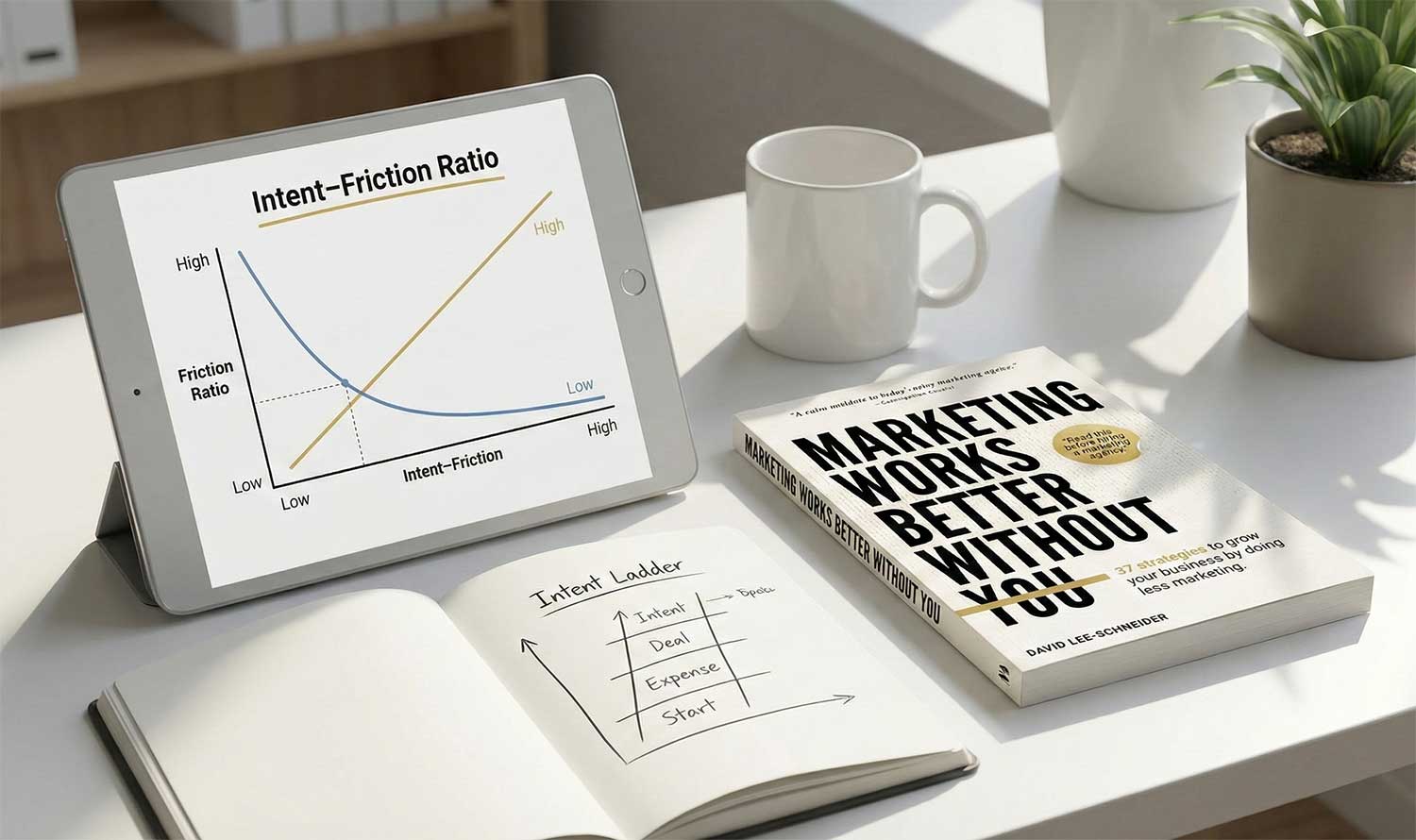
Most marketing advice is obsessed with traffic. More clicks. More impressions. More eyeballs. That is rarely the real problem. The real problem usually appears later, when someone is already interested and the website quietly makes it harder than it needs to be to move forward. That gap is what I call the intent-friction ratio.
I first introduced the intent-friction ratio in my book Marketing Works Better Without You, after seeing the same conversion pattern repeat across hundreds of websites.
What the intent-friction ratio means
Every visitor arrives with a certain level of intent. That intent might be vague curiosity or it might be a clear readiness to act.
At the same time, every website introduces friction. Friction is the effort required to move forward.
- Pages to navigate
- Forms to fill out.
- Decisions to make.
- Language to interpret.
- Uncertainty to resolve.
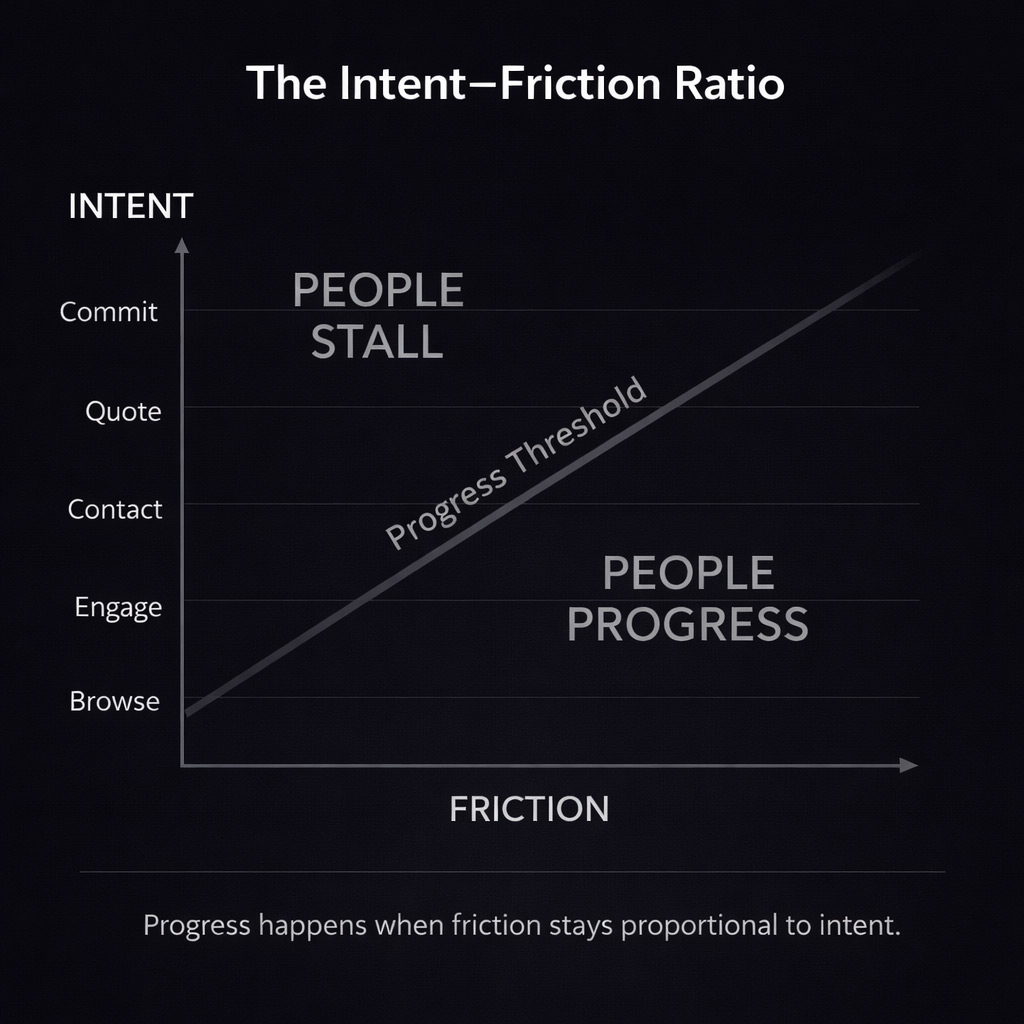
The intent-friction ratio is simply the relationship between those two forces.
When motivation is high and effort is low, conversion feels easy.
When motivation is high and effort is high, people stall or disappear.
When motivation is low and effort is low, people may stay engaged.
When motivation is low and effort is high, nothing happens.
Most conversion problems come from a mismatch, not from a lack of interest.
The intent ladder
To understand the ratio, it helps to understand intent itself.
Not everyone arrives in the same state of mind.
- Some people are exploring.
- Some are comparing.
- Some are ready to move.
You can think of this as an intent ladder.
At the top, intent is low. People are learning and orienting themselves.
In the middle, intent is forming. People are evaluating options.
At the bottom, intent is high. People want to take a next step.
The mistake most websites make is treating everyone the same, regardless of where they are on that ladder.
Why friction is not always bad
Friction gets a bad reputation, but friction is not the enemy.
Friction is only a problem when it is out of proportion to intent.
A detailed enquiry form can be perfectly reasonable for someone who is ready to engage. The same form feels exhausting to someone who is just trying to understand a problem.
The issue is not how much friction exists.
The issue is when and where it appears.
Practical example one. Contact forms
Someone searches for “web designer near me”.
That is a strong signal of intent.
If they land on a page with a short, clear form that asks only what is needed to start a conversation, the ratio feels right.
If they are asked for budgets, timelines, internal approvals, marketing goals and long explanations before they have spoken to a human, the ratio breaks.
Their motivation was high, but the effort demanded even more.
Now compare that with someone reading an article about why websites struggle to convert.
That person is early stage.
A light next step like a short email sign up makes sense. A full contact form does not.
Same form. Different intent. Very different outcome.
Practical example two. Service pages
Many service pages try to do everything at once.
- They educate.
- They sell.
- They qualify.
- They reassure.
- They close.
This creates friction because the page is unclear about who it is for.
A high intent service page should prioritise clarity, reassurance and direction. Not long explanations.
An early stage page should reduce pressure and offer a way to continue without commitment.
One page. One dominant intent level.
Practical example three. Pricing pages
Pricing pages are one of the clearest signals of elevated intent.
If someone clicks on pricing, they are already leaning forward.
Hiding prices behind calls or forcing people through long explanations adds friction at exactly the wrong moment.
The job of a pricing page is not to persuade someone that pricing exists. It is to help them decide whether it fits.
How to use the intent-friction ratio
You do not need more tactics. You need better alignment.
For every page on your site, ask one question.
What level of intent does someone have when they land here?
Then ask a second.
Does the effort I am asking for match that intent?
If those two are out of sync, conversion will always feel harder than it should.
Why this matters
When you design with the intent-friction ratio in mind, something shifts.
- You stop pushing people who are not ready.
- You stop slowing down people who are.
- You remove obstacles instead of adding persuasion.
Marketing becomes quieter, simpler and more effective.
In my experience, that is where the real gains usually are.
 David Lee-Schneider Marketing
 David Lee-Schneider

 David Lee-Schneider Marketing
 David Lee-Schneider
 FlySocial Digital
 David Lee-Schneider Marketing
 David Lee-Schneider Marketing