
 David Lee-Schneider
A business owner lands on your website at 10:43pm.
They’ve read the service page.
The offer makes sense.
The benefits are clear.
The price feels reasonable.
Their cursor hovers over the enquiry button.
Then they leave.
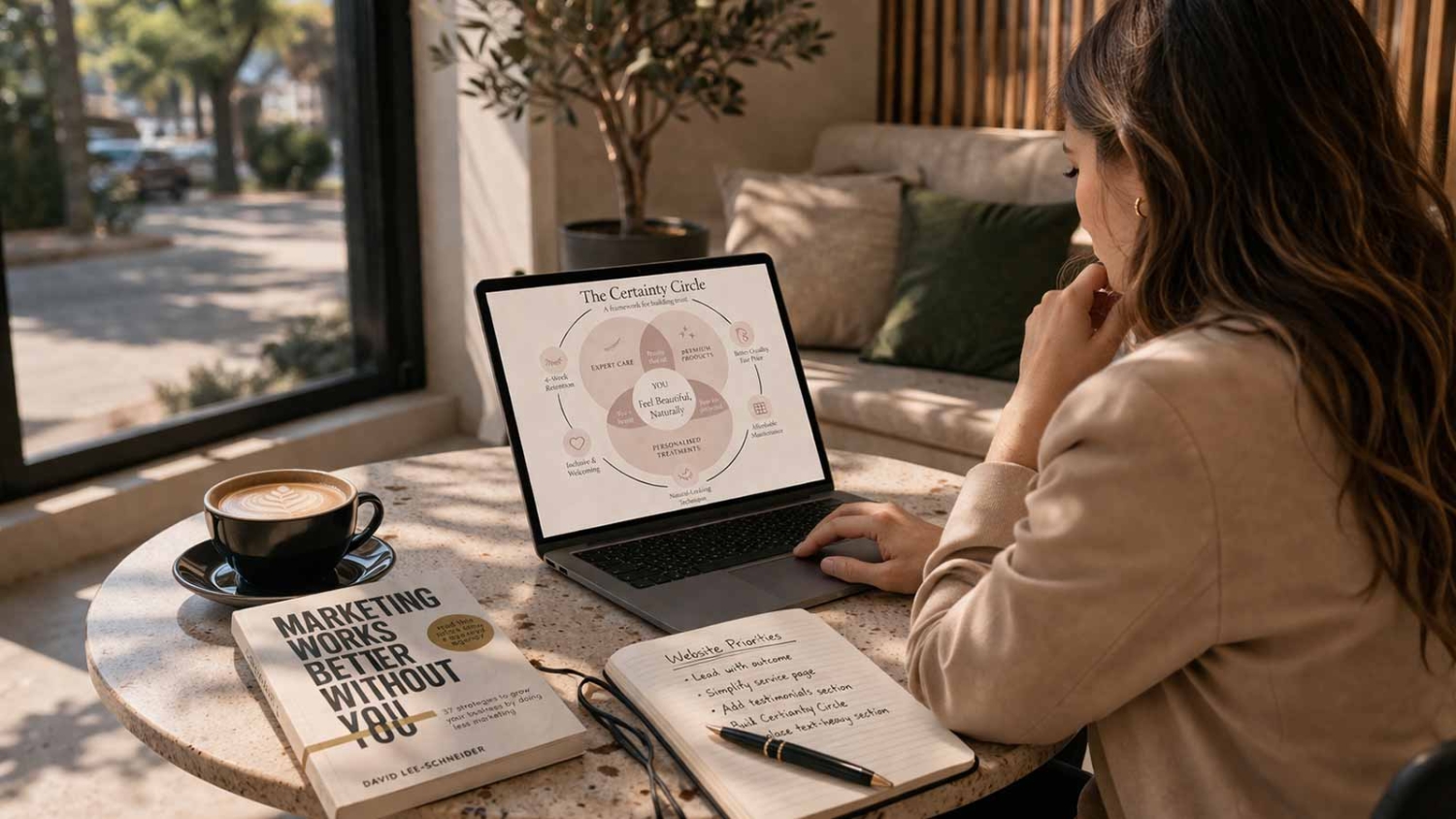
This is exactly the kind of hesitation the Certainty Circle is designed to solve.
It is one of the most overlooked reasons people fail to convert on service-based websites. It is rarely because the offer is weak. More often, it comes down to uncertainty.
By the time someone reaches this stage, they are often already interested. They understand the problem they need solved and are actively evaluating whether your business is the right fit.
In many cases, the website is already doing a good job of explaining the service. The offer is clearly described, the benefits are well written, and the point of difference is communicated intelligently.
And yet, people still leave.
The real issue is often the gap between understanding something intellectually and feeling confident enough to move forward.
This is where many service businesses quietly lose people who were otherwise ready to buy.
These are not cold visitors.
These are warm buyers who were seconds away from taking action.
A significant portion of people process information visually. For them, words alone are often not enough to create the sense of clarity and trust needed to make a decision.
They may understand what you do, but still struggle to picture what working with you actually looks like, how the journey unfolds, or why your approach is different in a way that feels tangible.
The natural response for many businesses is to add more copy.
More explanation, more benefits, and more detail.
But more words do not always reduce hesitation.
Sometimes they simply create more cognitive effort.
People do not usually hesitate because there is too little information. More often, they hesitate because they cannot quickly see what saying yes actually looks like.
That is the problem the Certainty Circle was designed to solve.
Words tell.
Frameworks show.
The Certainty Circle is a visual trust framework that helps people instantly understand the outcome, the process, and the strengths of your approach.
Rather than relying on paragraphs of explanation, it gives visitors a way to see how your business is structured to help them succeed.
At the centre sits the client’s desired outcome.
This is not the service itself, but the real result they want.
For an accounting firm, for example, this might be financial clarity and peace of mind.
Surrounding that are the three core pillars that make the outcome possible, such as compliance, growth, and confidence.
Around the outside sits a ring of five differentiators that reinforce why your way of working is distinct, whether that is proactive advice, fixed fees, fast support, tax optimisation, or something else specific to your business.
The power of the model lies in the way it reduces mental effort.
Instead of asking someone to read, interpret, and mentally organise a large amount of copy, the visual communicates the structure of the relationship almost instantly.
It helps people understand not just what you do, but how the different parts of your service work together to create the outcome they want.
The Certainty Circle in Practice
To see why this works so well, it helps to look at two very different service businesses.
Example 1: Beauty Salon
Take Lynn Beauty Care, for example, a Brisbane-based brow and lash salon.
The client is not really buying a lash lift or brow treatment.
What they are truly buying is the emotional outcome at the centre of the circle: confidence.
Around that outcome sit the three pillars that create it, such as expert care, premium products, and personalised treatments.
Then the outer ring reinforces why this salon feels like the right choice: experienced specialists, visible before-and-after results, a luxury in-salon experience, flexible bookings, and trusted client reviews.
In one simple visual, the client can immediately see not just what the salon offers, but why the experience leads to the feeling they actually want.
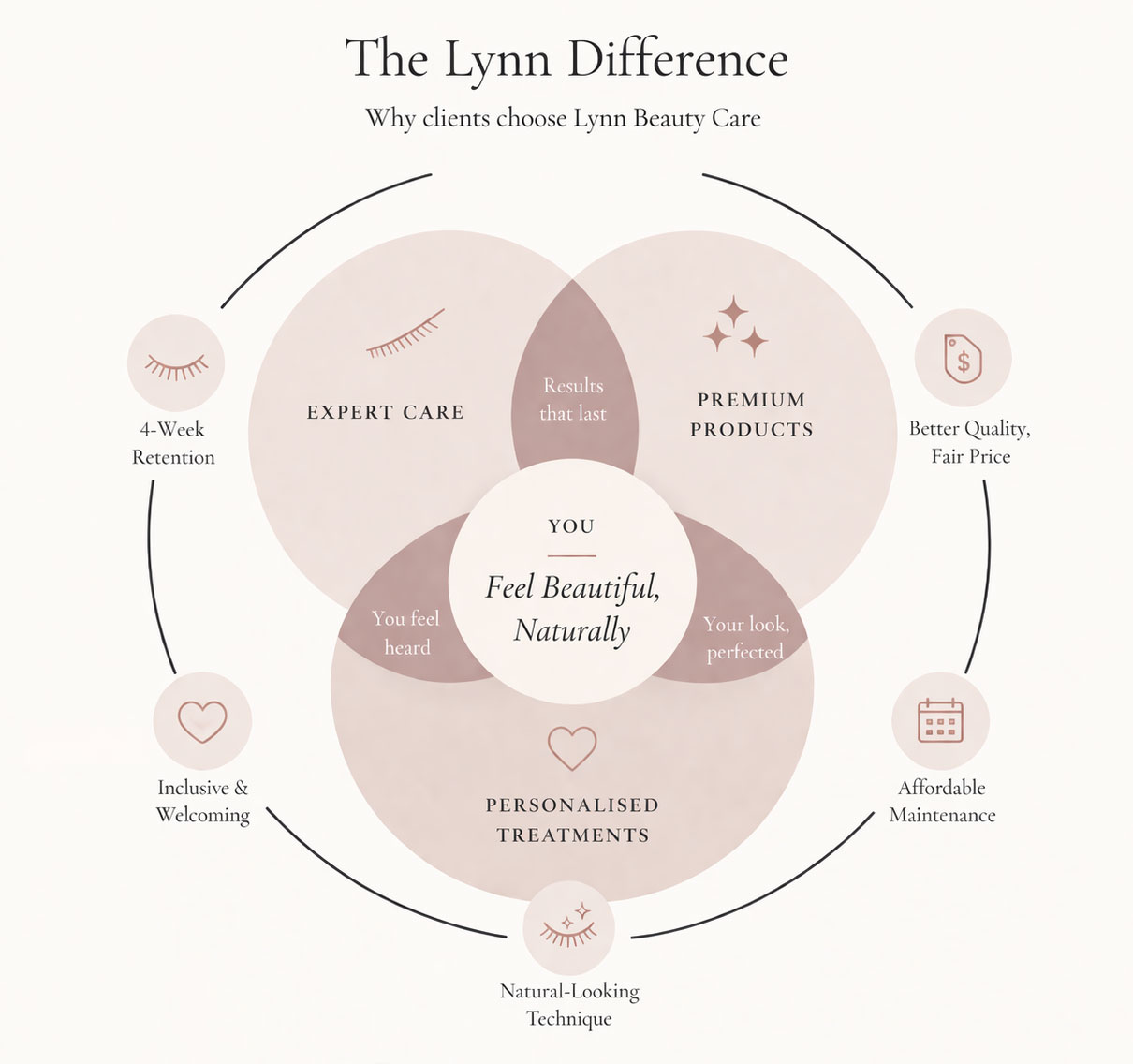
Example Certainty Circle for Lynn Beauty Care, a beauty salon in Newstead, Brisbane.
Example 2: Law Firm
Now compare that to Ballantine Law, a law firm based in Bundaberg.
Here, the centre is completely different.
The desired outcome may be certainty and protection.
The three pillars might be legal expertise, clear communication, and strategic representation.
The outer ring then reinforces trust through differentiators such as fast response times, transparent fees, specialist knowledge, proven outcomes, and direct access to senior lawyers.
The service itself is entirely different, but the psychology is the same.
In both cases, the visual framework reduces hesitation by making the path from problem to outcome immediately clear.
That clarity is what builds certainty and turns hesitation into action.
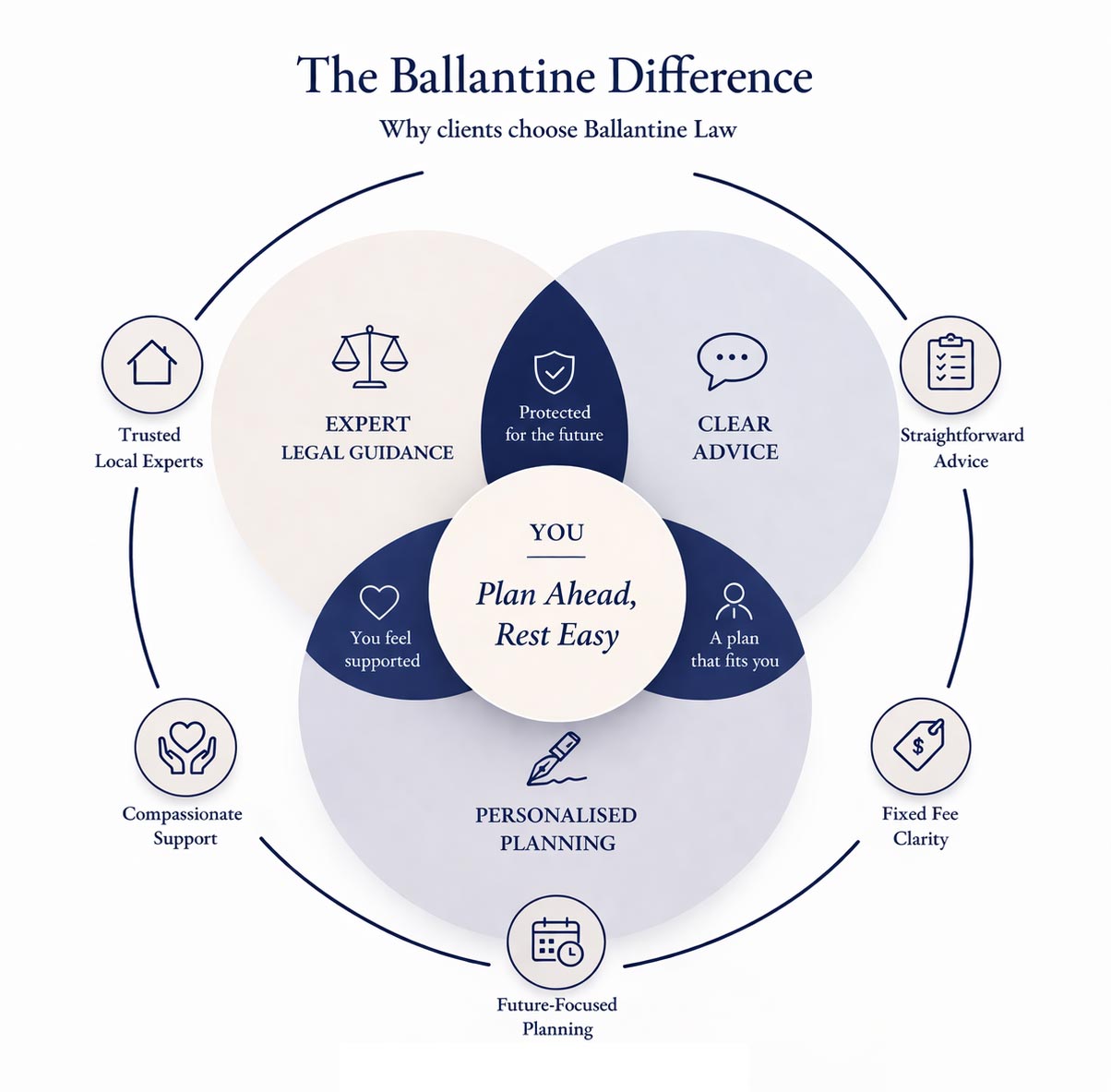
Example Certainty Circle for Ballantine Law, a Bundaberg law firm.
Why the Certainty Circle Works
This matters because most service purchases are not purely rational decisions.
People often decide emotionally first and then use logic to support the choice they have already made.
If uncertainty is left unresolved, the mind begins to look for reasons to justify hesitation.
- The process feels unclear.
- The price feels bigger.
- The risk feels higher than it actually is.
A strong visual model changes that dynamic by creating a sense of order and confidence.
What makes the Certainty Circle especially useful is that it works across a wide range of service businesses.
A beauty salon might centre confidence and self-image. A legal firm might centre certainty and protection. A consulting business might centre growth and strategic clarity.
The structure remains the same, but the language adapts to the emotional outcome the client is really buying.
Building your own Certainty Circle starts with one simple question.
What is the real outcome your client wants?
Then identify the three major pillars that consistently create that outcome.
Finally, define the five elements that genuinely make your approach different and stronger than the alternatives.
When these are brought together visually, your value becomes much easier to understand and trust.
At the point of conversion, people rarely need more words.
More often, they need a clearer way to see what saying yes actually looks like.
That is where the Certainty Circle becomes so effective.
It does not replace strong copy.
It gives people something words alone often struggle to provide:
the feeling of certainty.
People rarely buy when they merely understand.
They buy when they can finally see what saying yes feels like.
 David Lee-Schneider